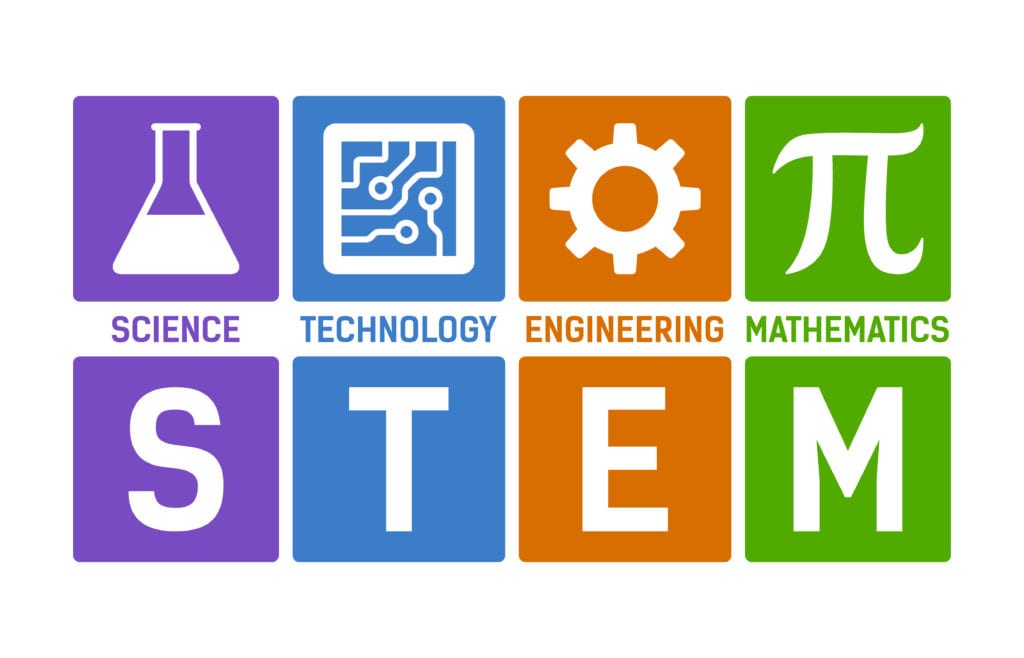
What is STEM?
STEM is an educational program developed to prepare primary and secondary students for college, graduate study and careers in the fields of science, technology, engineering and mathematics (STEM). In addition to subject-specific learning, STEM aims to foster inquiring minds, logical reasoning and collaboration skills.
Why Choose STEM?
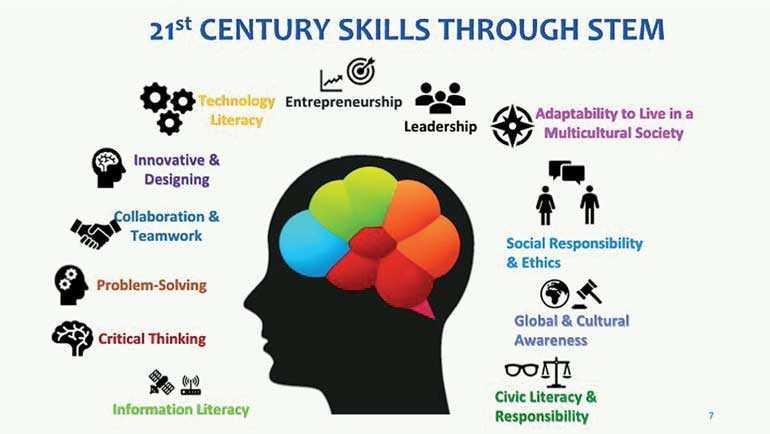
The reason for this is that the careers of the future will most certainly be centred around STEM fields while also invoking 21st-century skills such as critical thinking, creativity, cultural awareness, collaboration and problem-solving. When done well, STEM education complements the development of 21st-century skills.

What can we learn in STEM?
STEM is an approach to learning and development that integrates the areas of science, technology, engineering and mathematics.
Through STEM, students develop key skills including:
- problem solving
- creativity
- critical analysis
- teamwork
- independent thinking
- initiative
- communication
- digital literacy.

What Jobs Are in the STEM field?
Each STEM field offers many different specializations. For example, students interested in science can pursue programs in biology and chemistry, while aspiring engineers can explore fields like electrical engineering and mechanical engineering.
Each specialization offers unique challenges and areas of expertise, which can help students determine their career path. Students interested in theoretical physics, for example, may be better served focusing on mathematics rather than engineering.

What are STEM challenges?
First, what is a STEM Challenge? It’s a project that gets kids to explore, design, test, repeat in science, technology, engineering or math. Why should you care? Because STEM challenges are all about the thought process and thinking like a STEMist improves problem solving in all areas of life.
Most children struggle to understand the importance of science because they cannot see the connection between what they learn in the classroom and the happenings of the real world. Students also have a perception of science subjects being either too difficult or too boring.
 Elwin Marc Malabosa Grade-11 Gentleness